
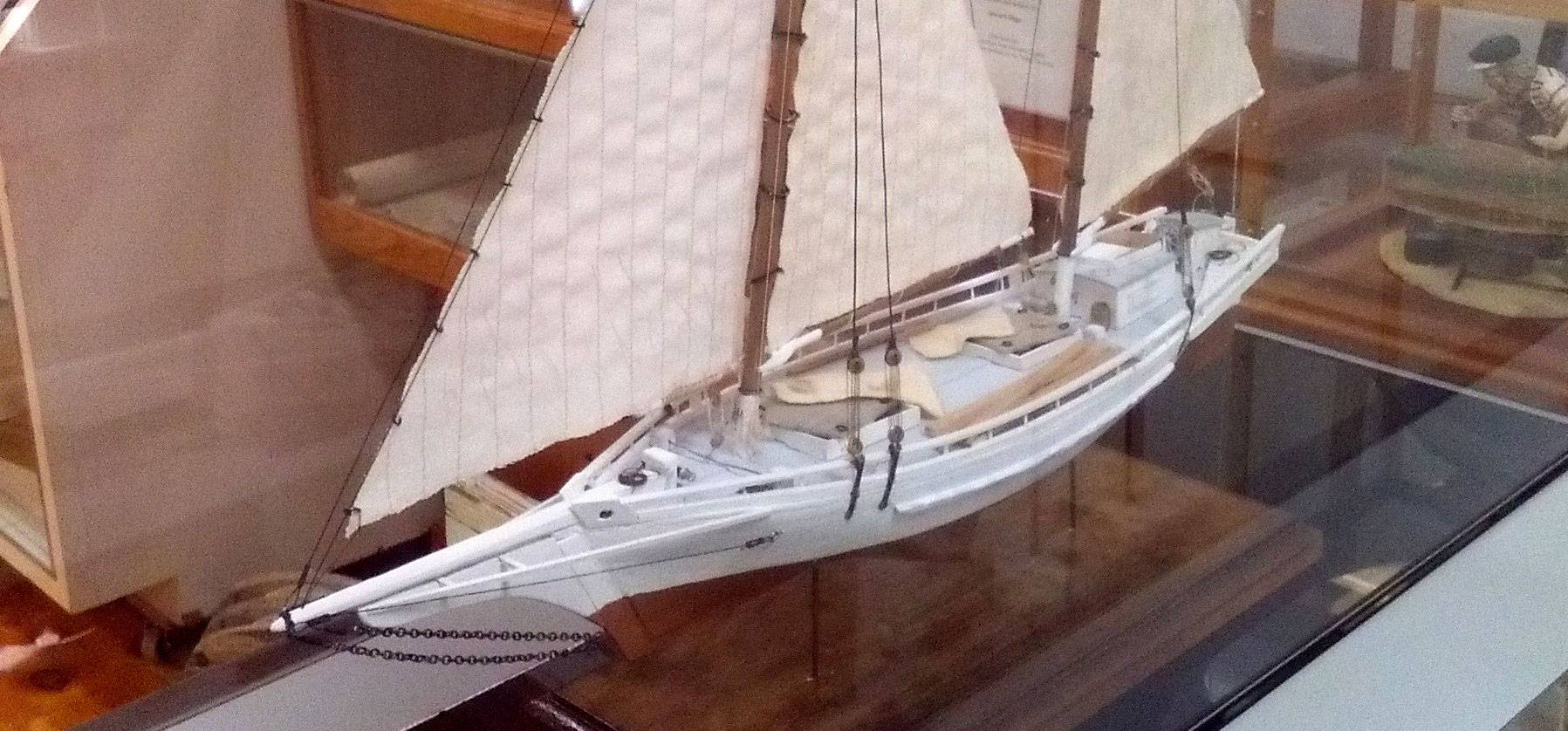
Bugeye Model
Our representative “Bugeye” model came in kit form from Wye River Models. It occupies the space between a truly scale model and folk art. It does bear a strong resemblance to Edna E Lockwood, built in Maryland in 1889. The model is set up for transport of lumber in the off-season, likely from the Mathews area up to Baltimore and is not rigged for oyster dredging. According to M. V. Brewington, about 30 bugeyes were built and registered in Virginia boat yards. It’s important to note that if the vessel was not registered, or otherwise documented, we would have no record of it, so it’s likely that more than 30 bugeyes were built in Virginia over the period 1866 – 1918. At least three were recorded to have been built at Hicks Wharf by Machen family members. We’ve named our bugeye “Leonora” which was a Machen family name, and the namesake was built in 1877 by V. Machen. The original Leonora would not have initially had the “patent stern”, the platform seen in the aft quarters, which gave more deck space, patented in 1908. Also, the original Leonora was a good bit shorter at 51-feet, our model is in the 70-foot range. But Leonora was chosen to represent Mathews-built vessels that we have no photographic references for and to represent the bugeye class at large.
A “bugeye” is a term for a class of large, log-built, two-masted sailing vessels, that evolved from smaller log-canoes, in the Chesapeake Bay region. It was said that a log canoe with a deck and cabin was a “bugeye”. They were constructed in the same fashion as log canoes, with logs laid down, hand-hewn to shape and pinned together to form the vessel. Lengths were typically 30 to 80-feet, while canoes were around 18 to 30 feet. The reason for the development was the opening of the oyster beds to dredging following the Civil War. Log canoes were not powerful enough in terms of working sail to pull the dredges across the oyster beds. In the off-seasons bugeyes were used to transport goods up and down the Bay and in the nearby coastal waters. They did not venture too far from the Bay and are truly a regional development. They were considered a “wet” boat and did not perform well in the off-shore capacities. As larger trees for log-construction disappeared, the bugeyes began to utilize plank-on-frame construction for all or part of the vessel. It’s reported that because these boats were built without plans by “rack of eye” they had some asymmetry in shape and could often be faster on one tack over the other.
The kit was composed of mostly wood strips and assorted hardware.
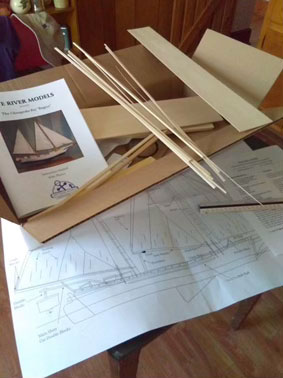
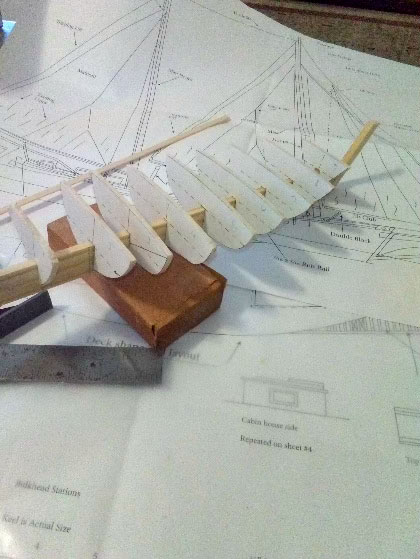
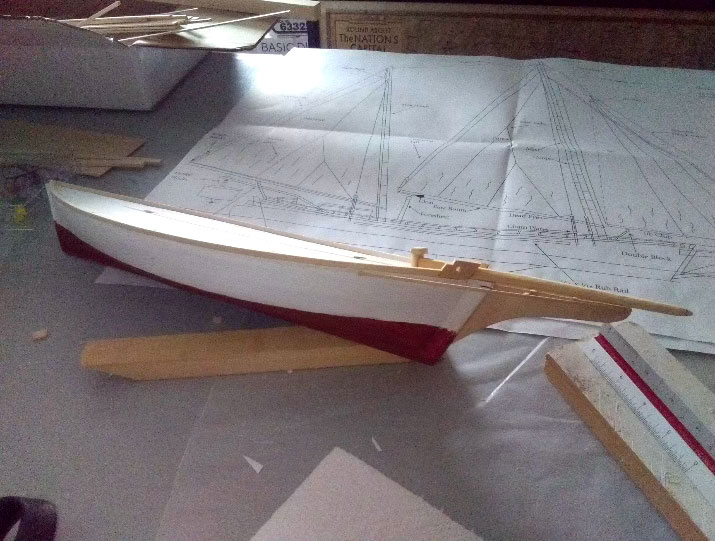
Molds were cut out to lay the planking on. Most of the model was planked but due to the hard curves at the ends of the vessel, solid wood chunks were laid in and carved to meet the planking.
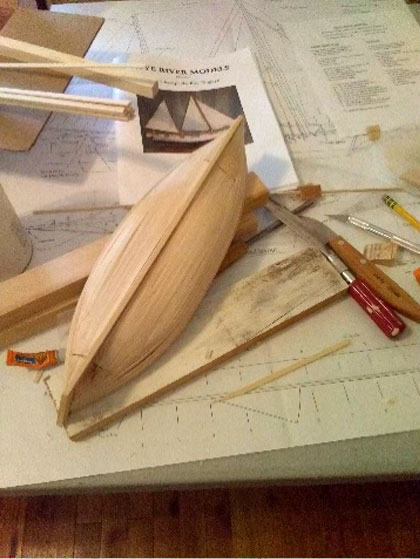
Paint was continuously applied during the building process to keep ahead of the project.
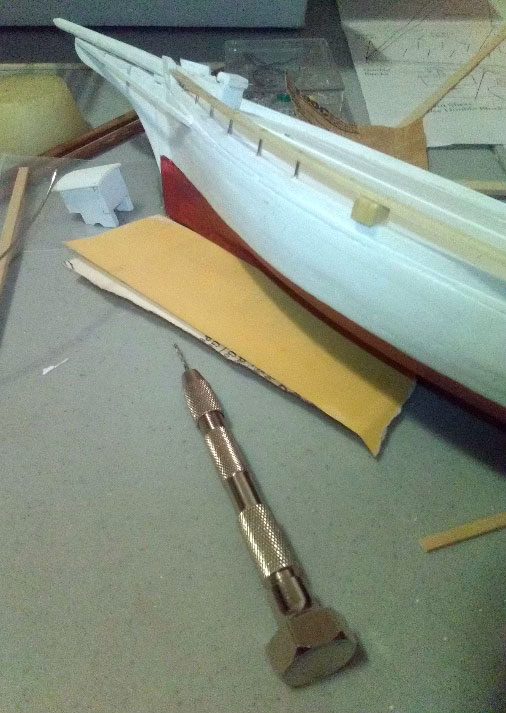
The railings were supported by spaced individual wires, which were inserted in holes drilled in the log rail and the upper rail.
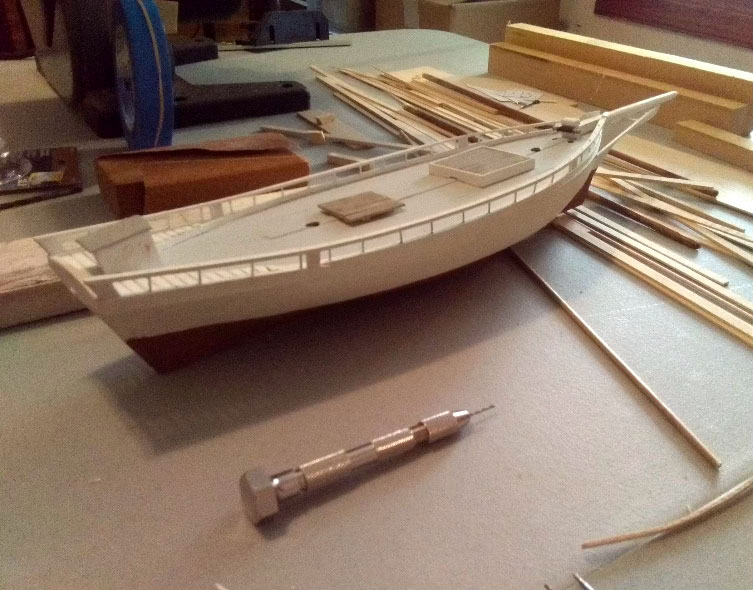
Masts, hatches, cabin and other gear were built and attached to the deck.
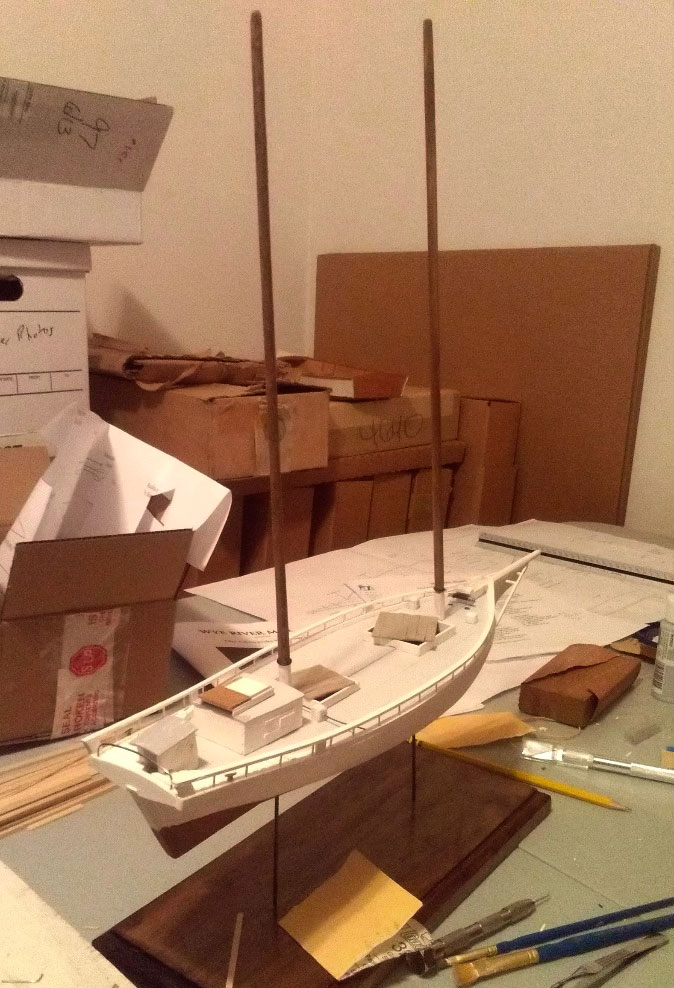
Sails were crafted by Carolyn August from the kit plans, and attached with hoops to the masts.
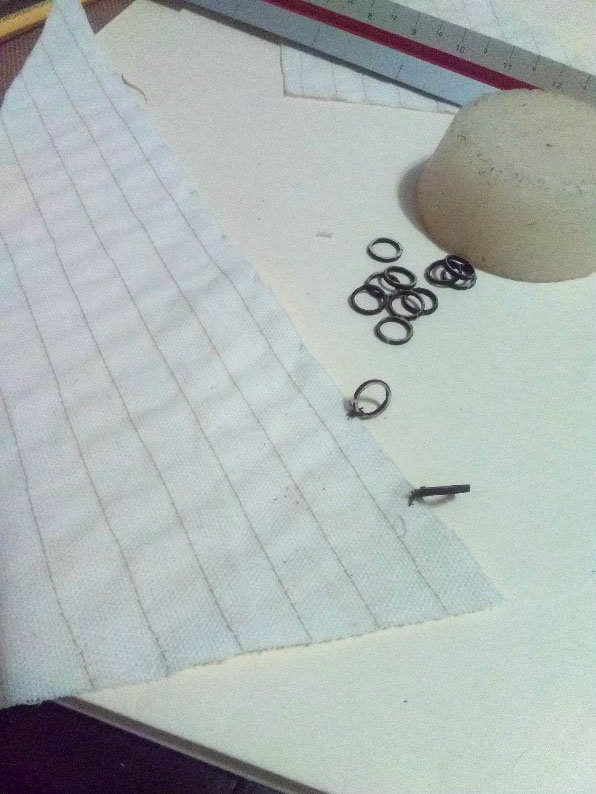
The sails and standing rigging were installed and the model declared “done” around August 21st, 2026 and delivered to the museum for display.
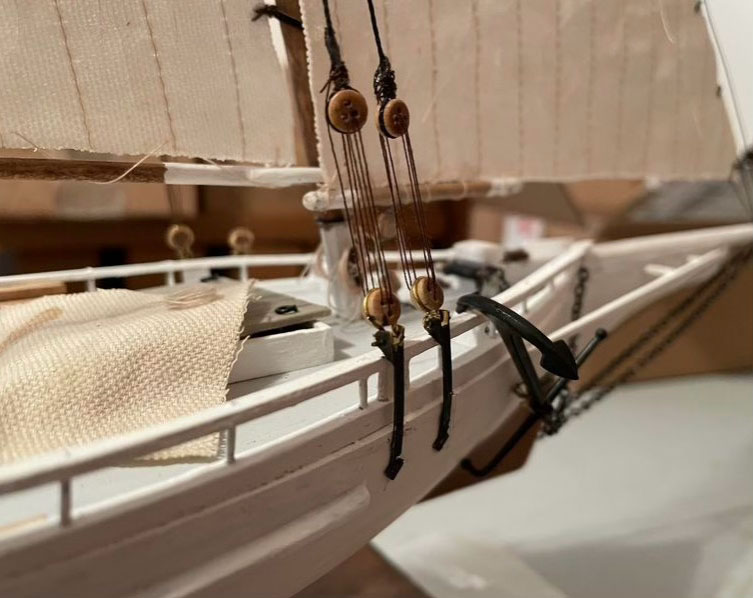
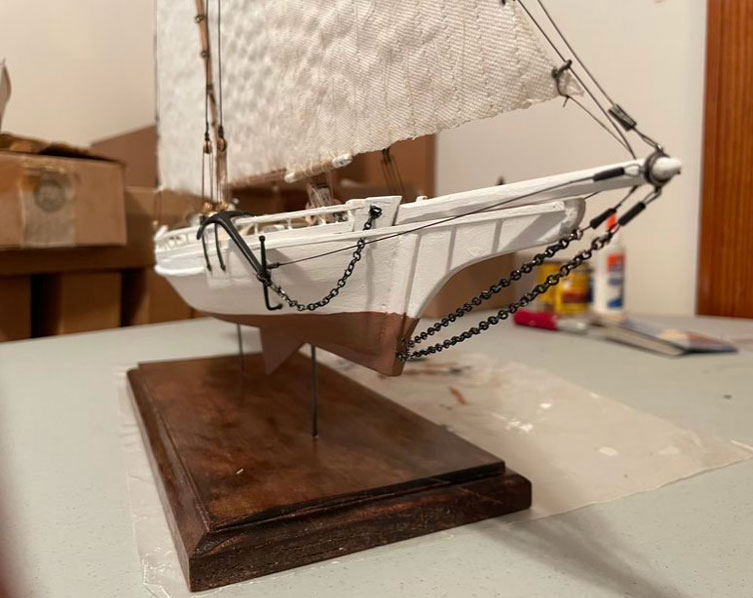
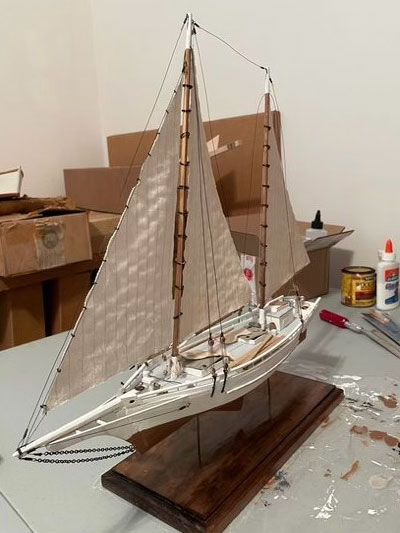
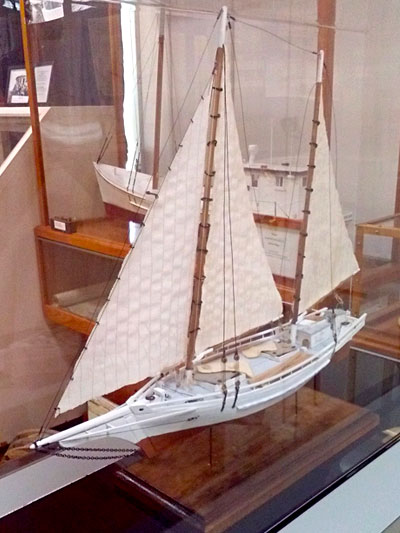
A couple of notes, a “push boat”, a motorized yawl boat that typically hangs from davits incorporated in the patent stern, was not installed. This gives a cluttered look to the stern and was left off, and this is not incorrect for bugeyes from the time period represented. Also, most boats of this type were equipped with “lazy jacks” which are lines run from the mast heads to the booms and help contain the sails in a lowered position. These were left off as well because with the small scale of the model, these lines would be hard to see and
therefore would not add additional value to the model for the time involved in their installation.
Model by Mike Moore for the Mathews Maritime Foundation
August 21st, 2026